
CRM Tidy Up for a Camping Ground Company
1) Executive Summary
What changed
We transformed a cluttered HubSpot portal into a clean, operable CRM that the team could trust day-to-day, and that leadership could finally use for reporting.
Why it mattered
Before the tidy-up, the CRM was quietly producing unreliable pipeline data and slowing down the team. After the tidy-up, the system became simpler to operate, easier to train, and far more accurate for forecasting and performance tracking.
2) The Starting Point
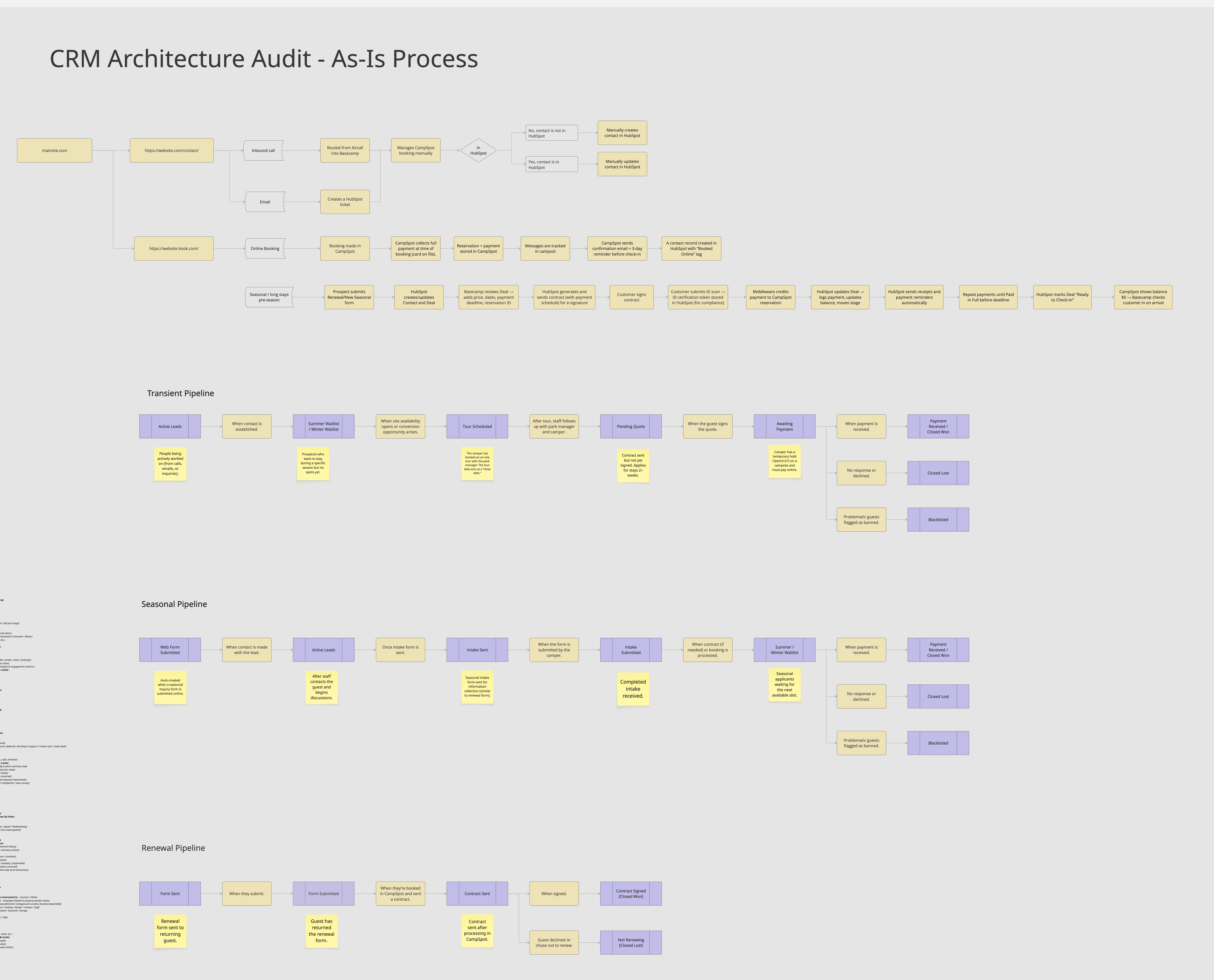
The Camping Ground Company had a HubSpot setup that had grown over time without a clear structure. It contained a mix of processes and labels that made it difficult to understand what was actually happening in the pipeline.
Common symptoms:
- Deal pipelines were being used as a “catch-all” for early interest, waiting lists, and non-sales activity
- Pipeline stages were acting like statuses or labels, not actual sales steps
- Different pipelines overlapped or duplicated each other
- Reporting looked busy, but the data could not be relied on for decision-making
3) The Real Problem Underneath
The CRM was treating too many records as deals too early.
That created two major issues:
- Operational confusion: the team could not quickly tell what was actionable vs what was simply not ready
- Reporting distortion: “deals” that were not real opportunities sat in pipelines for long periods, making it look like deals took far longer to close than they actually did
This is the kind of mess that does not always look dramatic in the portal, but it becomes painful when a team tries to scale, train, forecast, or report.
4) Our Approach
We focus on building a CRM structure that mirrors reality.
We work from three principles:
- Right object, right purpose: leads are not deals, and deals are not people
- Stages must represent progress: pipeline stages should be steps, not labels
- Reporting must reflect truth: structure comes first, automation comes second
5) What We Changed
A) Simplified pipelines so stages represent real progress
We restructured deal pipelines so each stage reflected an actual step in the sales process.
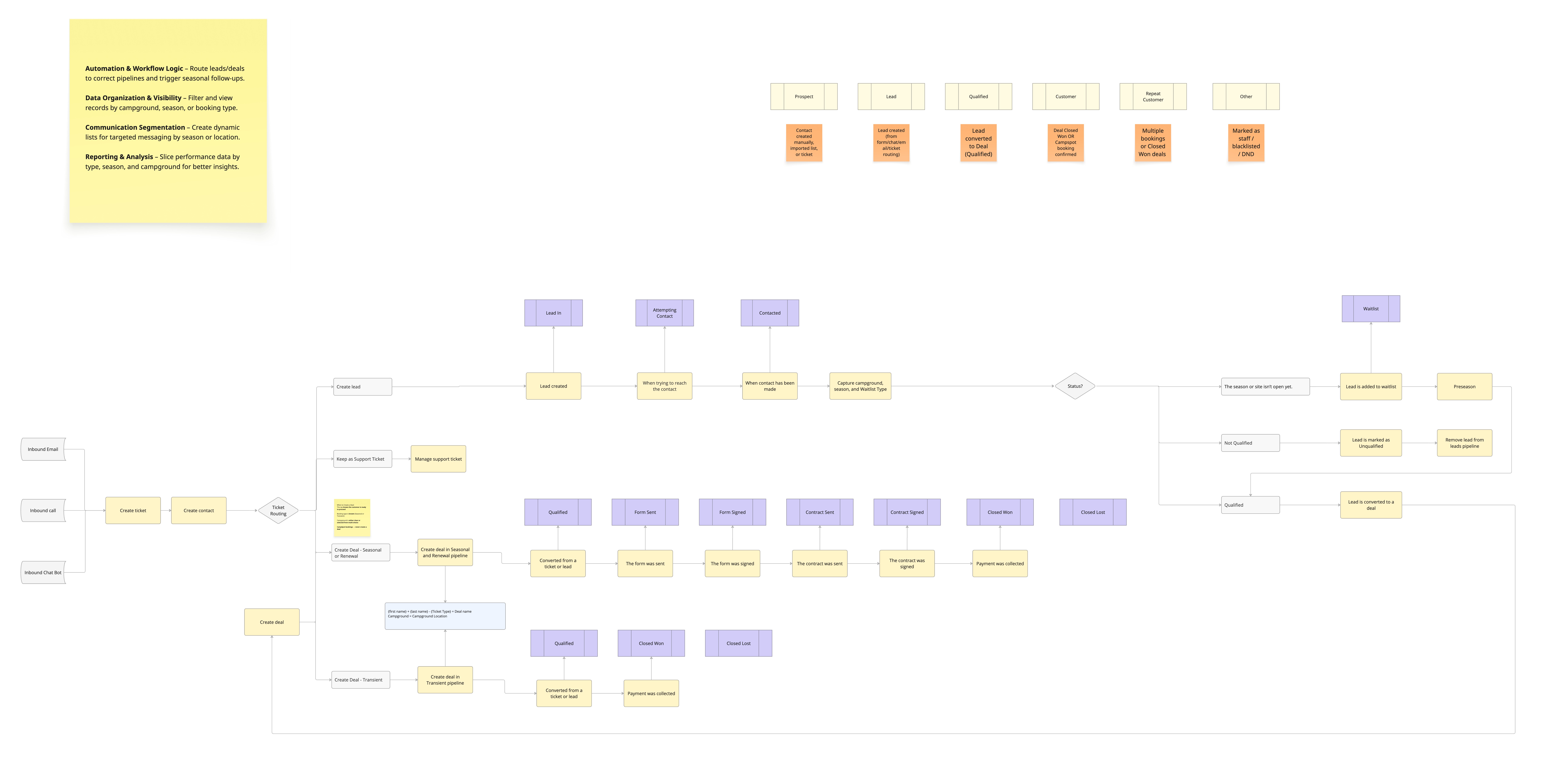
Instead of a long list of mixed labels, the pipeline became clean and readable, for example:
- Qualified
- Form sent
- Submitted
- Contract sent
- Signed
- Closed won / closed lost
This immediately makes the pipeline usable for both reps and management.
B) Moved “not ready” records out of deals
We separated early interest and long-horizon records (like waiting list interest) out of the deal pipelines and into a dedicated lead process.
This prevented the pipeline from being clogged by records that were not active opportunities and stopped reporting from being skewed by dormant records.
C) Created a controlled “convert to deal” moment
We implemented a clean and repeatable conversion point where a record becomes a deal only when the team has the minimum required information.
That means:
- no deals created prematurely
- no deals created with missing context
- no random records landing in the wrong pipeline
The result is a pipeline that stays clean without needing constant manual clean-up.
D) Built lightweight routing so the team always knows what to do next
We structured the process so the team can quickly categorize and route a new inbound record.
Depending on readiness, the record becomes:
- a lead to be worked and nurtured, or
- a deal to be progressed through the sales stages
This created clarity and consistency across the team.
E) Made the contact record the single source of truth
We improved how records were presented so the team could see everything they needed in one place:
- activity and interactions
- associated leads
- associated deals
- related records connected to the customer journey
This reduces time wasted hunting for context and improves follow-up quality.
6) The Result
After the tidy-up:
- The deal pipeline became clean and forecastable
- The team could track long-horizon interest without polluting deal reporting
- Leadership reporting became far more reliable
- The portal became easier to operate and easier to train
- Automation became safer to build because the foundation was stable
This is the difference between a CRM that stores data and a CRM that runs the business.
7) What This Demonstrates
This case study shows our core strength:
We make CRMs tidy, logical, and measurable
We remove clutter, align the structure to real-life process, and build a system that teams can actually use.
Automation is powerful, but the truth is:
automation only works well when the underlying structure is clean.