
Watch the client’s reaction
The client

ADC Consulting is a European Data & AI consultancy operating across Amsterdam, Copenhagen and Stockholm. Its commercial team uses HubSpot to support business development, marketing, event follow-up and pipeline management.
The ambition was clear: make HubSpot the central nervous system for sales and marketing, rather than a database ADC’s team had to work around.
The problem
ADC had used HubSpot for roughly 18 months, but the portal was not giving leadership or the business-development team a trustworthy view of where leads came from, how they progressed or what should happen next.
Several migrations—from Pipedrive to Zoho and then into the current CRM setup—had left behind duplicate and legacy fields. Early discovery identified hundreds of properties with only a small subset in regular use; the audit we led later catalogued 901 properties across Contacts, Companies, Deals and Leads, plus 39 active workflows across four clusters.
The practical symptoms were visible across the revenue process:
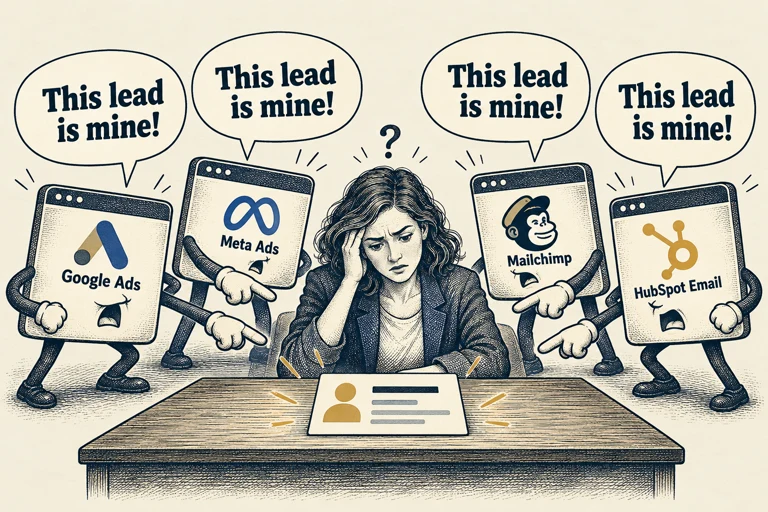
Lead-source attribution was unreliable, with event and campaign leads sometimes appearing as direct traffic.
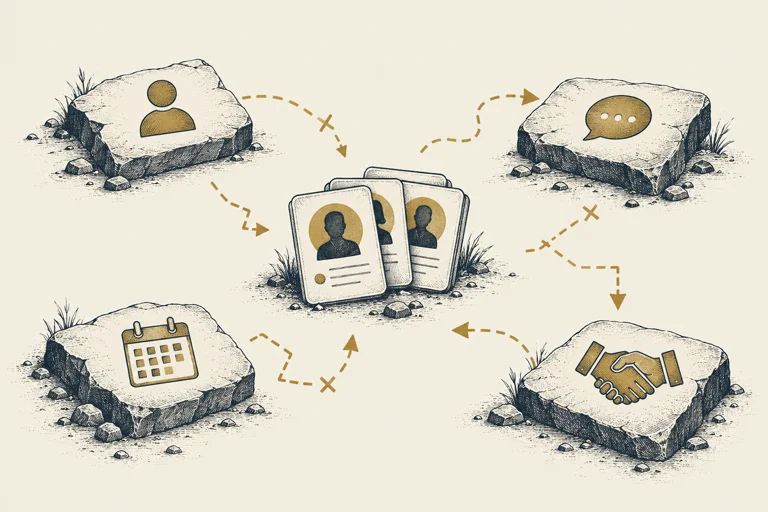
There was no consistently used lead-management process or lifecycle framework.
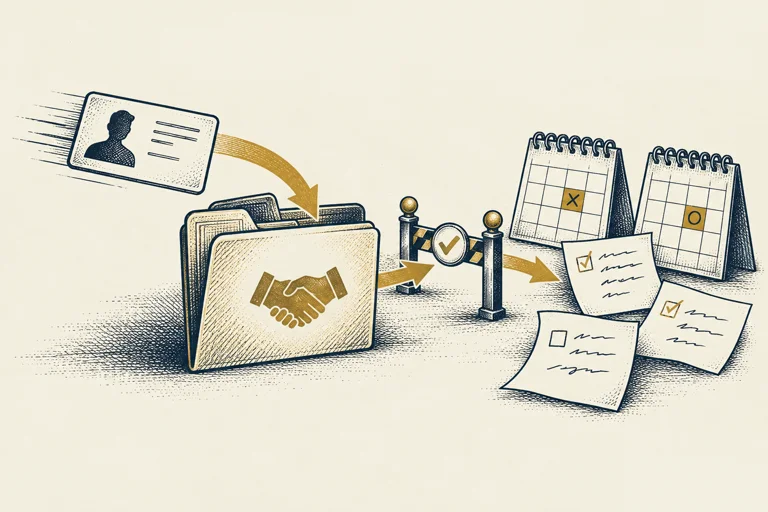
Deals were often created too early, while follow-up tasks and stage changes depended on individual habits.
Dashboards were cluttered and did not separate leadership reporting from the day-to-day needs of business development.

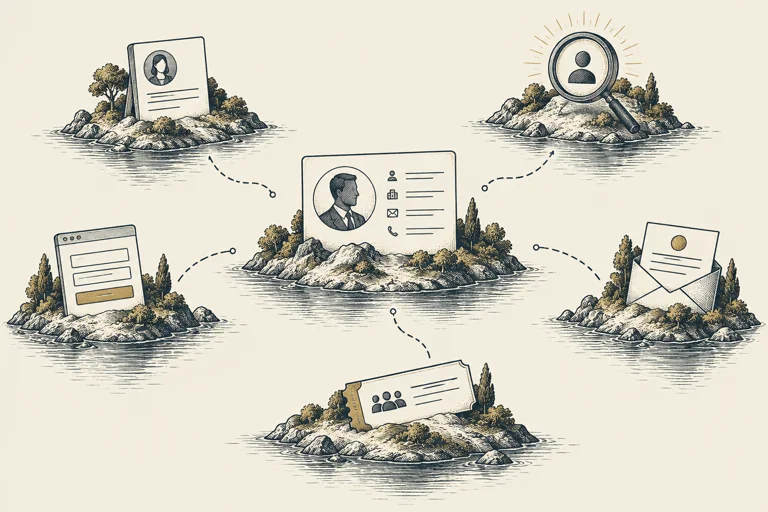
LinkedIn, Sales Navigator, forms, newsletters and other acquisition activity were not connected into one dependable journey.
Historical workflows, properties and tasks made it risky to change the system without first understanding dependencies.
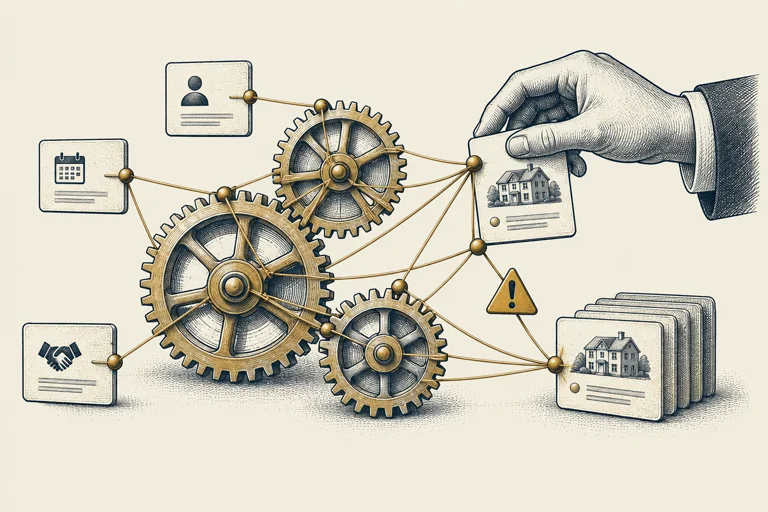
The core issue was data integrity, governance and adoption.
The approach
We split the engagement into two phases: first understand and audit the system, then implement the agreed changes.
Phase 1: Discovery, audit and architecture
Before changing the live portal, we ran structured workshops to understand ADC’s actual sales and marketing process. We led the review of workflows, properties, integrations and reporting requirements, then used the findings to create a phased governance and implementation roadmap.
Watch the sales-process workshop
We worked through lead intake, ownership, outreach, meeting booking and deal stages with the client before deciding how the CRM should support them.
Our discovery and audit work included:
- A sales-process workshop covering lead intake, qualification, ownership, deal progression and handoffs
- A technical HubSpot audit
- A workflow architecture map covering all active automations
- A property dependency review across the core CRM objects
- A future-state lifecycle and lead-management model
- A prioritised roadmap that separated foundation work from later reporting and optimisation
We designed the lifecycle model around how ADC’s team actually sold, rather than applying a textbook MQL/SQL template.
Phase 2: Governance and core implementation
In the second phase, we delivered the agreed CRM foundation. We organised its 13 features into three milestones:
1. Data foundation and governance
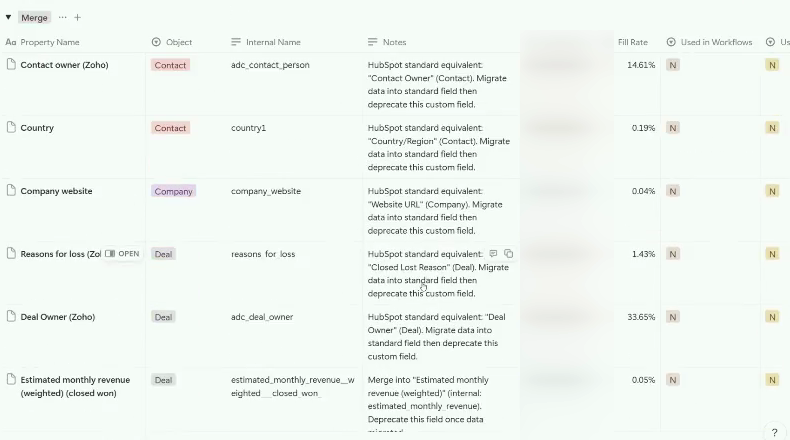
We used the audit to make explicit decisions about which properties and workflows to keep, merge, standardise, rebuild or retire.
- Reviewed, merged and deprecated duplicate or legacy properties
- Consolidated the workflow library and retired obsolete automation
- Established an agreed governance model before further configuration
2. Core configuration and lead intake
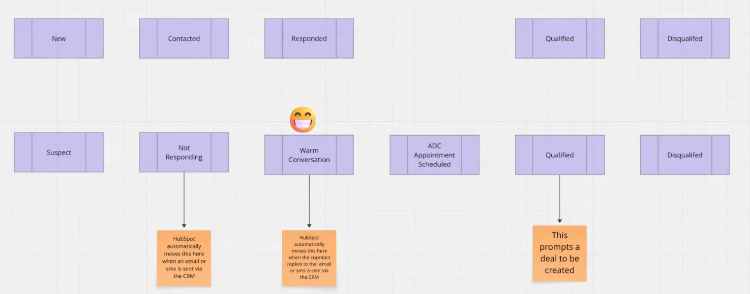
We translated the agreed model into source capture, lifecycle automation and a clearer intake process.
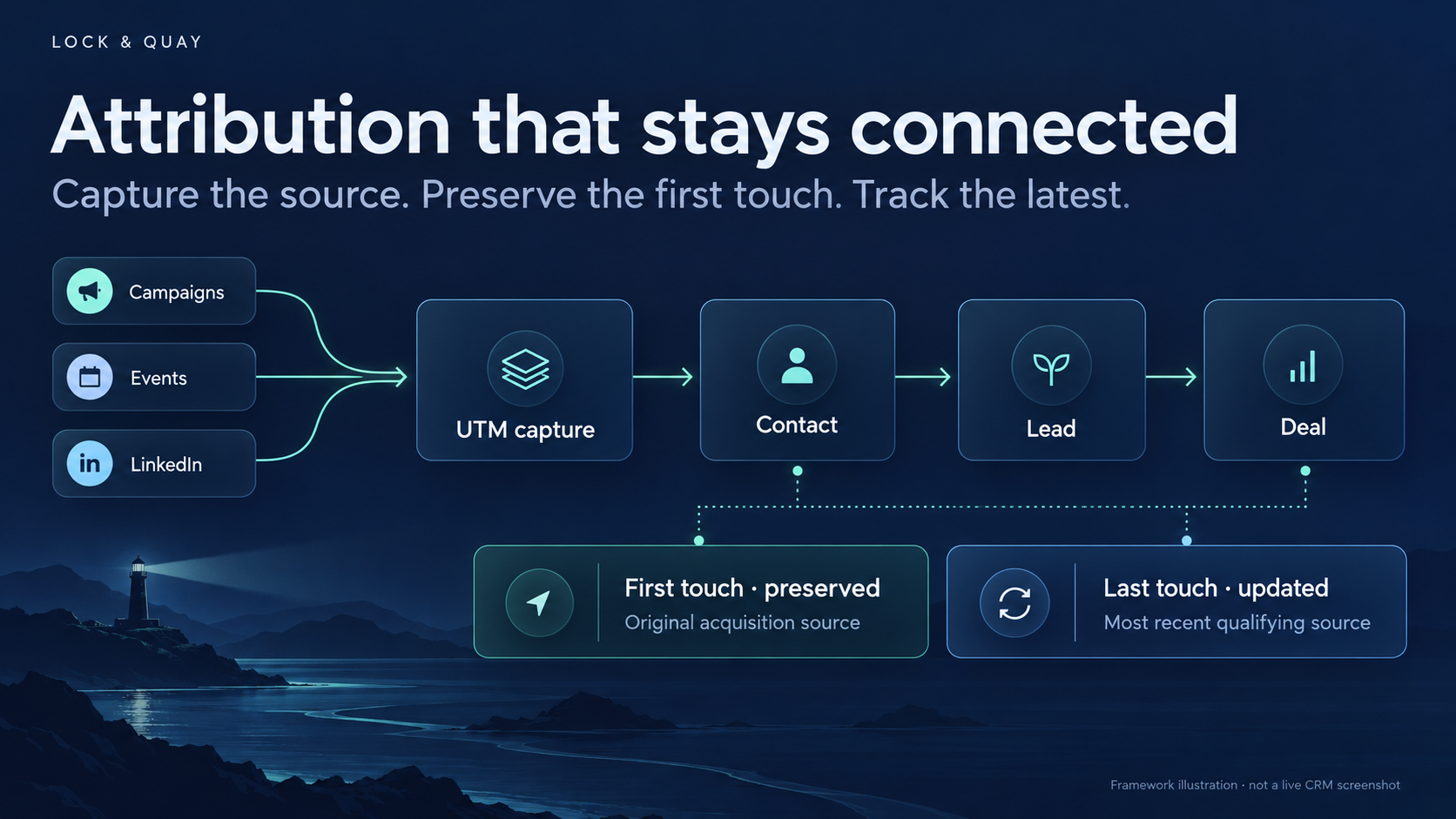
- Implemented first-touch and last-touch source capture across contacts, leads and deals
- Automated lifecycle-stage progression
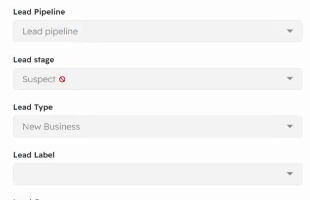
- Built a dedicated leads pipeline with stage-specific record views
- Improved the Contact Us and Contact an Expert forms for segmentation, routing and attribution
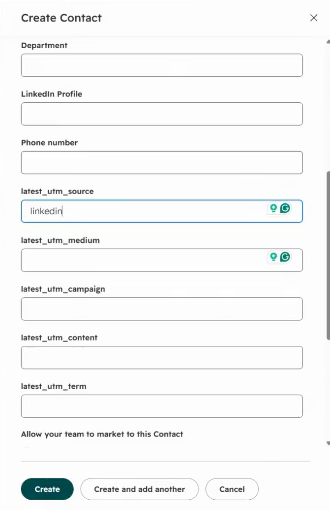
- Created a reusable UTM-capture form and walkthrough for LinkedIn campaigns
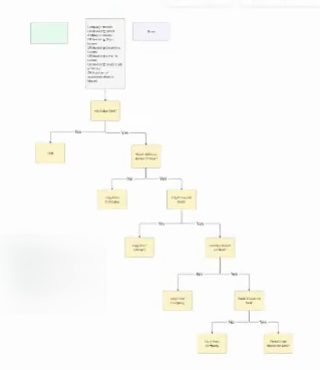
The redesigned workflow
The HubSpot configuration
3. Lead management, enablement and handover
We separated lead handling from deal progression, automated record handling and supported adoption with documentation and training.
- Automated contact creation or updating from intake forms
- Created or associated company records using captured data
- Documented the system in ADC’s CRM wiki
- Delivered live client training and recorded walkthroughs
The result
ADC finished the engagement with a cleaner, more controlled CRM foundation and a repeatable way to manage new leads.
Operational clarity
We replaced assumptions with an inventory of what existed, how it was connected and what could safely be consolidated. We gave ADC a clear governance path for properties and workflows before adding more automation.
A structured lead journey
We delivered lifecycle automation, a dedicated leads pipeline, stage-relevant record views and automated contact/company handling. This gave ADC a structured alternative to ad hoc deal creation and individual follow-up habits.
A dependable attribution framework
We delivered first-touch and last-touch capture, hidden UTM fields and improved intake forms. This established the basis for connecting campaigns, events and LinkedIn activity to CRM records without overwriting the original source.
What we delivered
- Sales-process discovery and future-state architecture
- HubSpot portal audit and prioritised roadmap
- Map of 39 active workflows across four clusters
- Governance review covering 901 CRM properties
- Property and workflow consolidation
- First-touch and last-touch attribution framework
- Lifecycle-stage automation
- Dedicated leads pipeline and optimised record views
- Updated Contact Us and Contact an Expert forms
- Reusable UTM attribution form and training video
- Contact and company creation automations
- CRM wiki, Loom walkthroughs and live team training
Adoption, not just configuration
We made documentation and training part of the delivery: a shared CRM wiki, walkthrough videos and live training supported the handover. Both phases were completed.
The client’s own feedback reflected the change:
“Really happy about all the progress that has been made!” — Eelko Huizing, after seeing progress
At the closing meeting, Eelko added:
“We learned a ton. We’re in such a better place than we were. Thanks a lot for all the work.”
See the cleanup in action
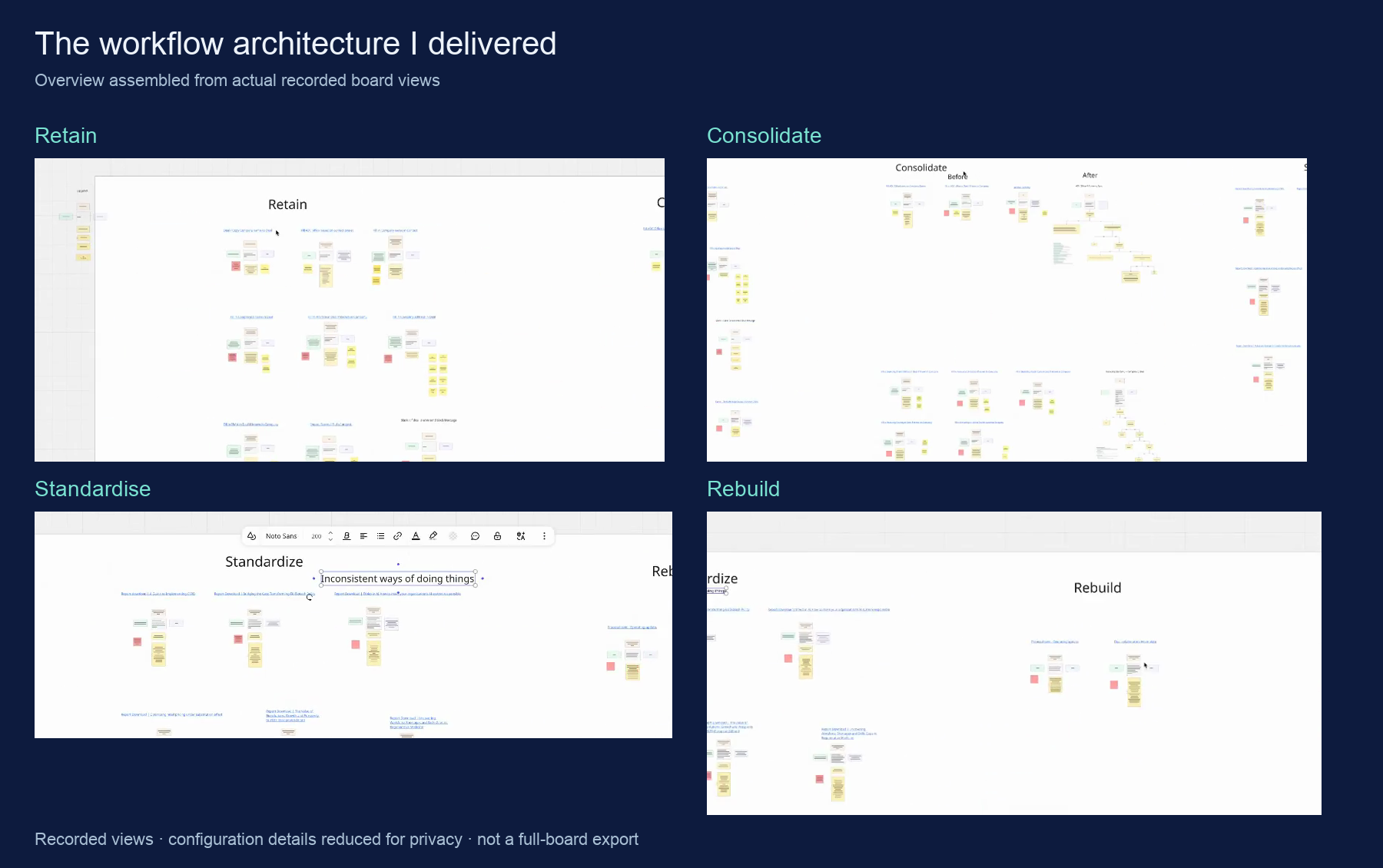
We made the dependencies visible before deciding what to change. These are cropped frames from our project recordings; identifying details are blurred.
901 properties reviewed
Across Contacts, Companies, Deals and Leads.
39 workflows mapped
The audit separated what to retain, consolidate, standardise, rebuild or archive.
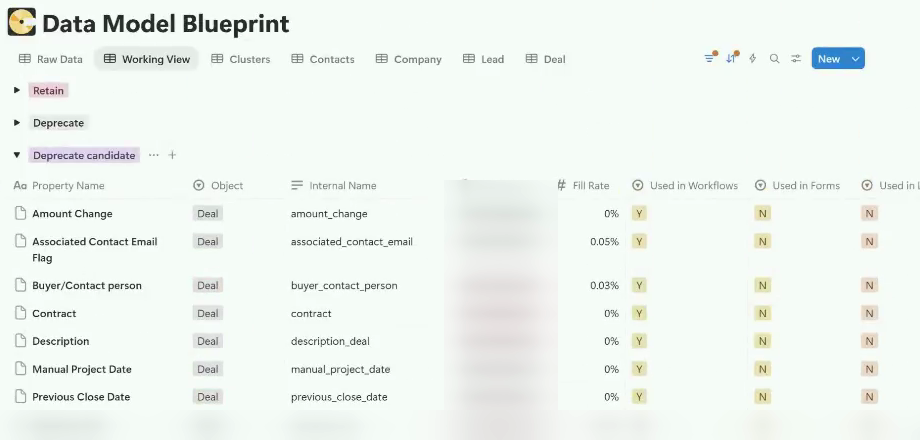
Explore: how we decided what should changeShow detailsHide details
We checked what each property supported, then reviewed ambiguous cases with the client’s team. A low fill rate alone was not enough to justify deletion.
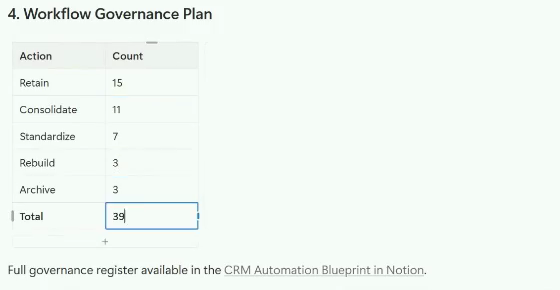
What to look for: some workflows were worth keeping. Others needed a consistent pattern, consolidation, a rebuild or retirement. Cleanup was a set of deliberate decisions.
Explore: why a low fill rate did not mean “delete”Show detailsHide details
During our blueprint review with the client, we confirmed that OrgChartHub fields supported selected key accounts. We retained the cluster for now, despite low overall fill rates.
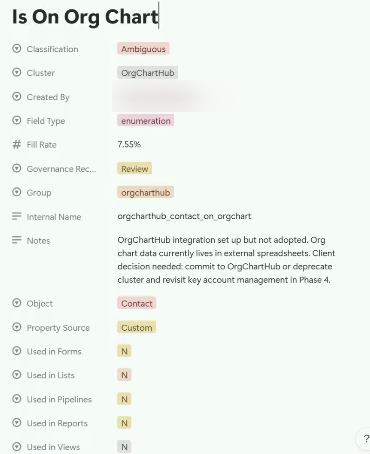
Watch the review process: five minutes of the property workshop condensed into 15 seconds at 20× speed. Silent, with table details blurred throughout.
The lesson: a field can matter to a small part of the business. Check its purpose and dependencies with the client before removing it.
Explore: why we consolidated a dependency chainShow detailsHide details
Our audit identified deal-currency updates that relied on three workflows executing in the correct order. We recommended consolidating them into one workflow with sequential branch logic.
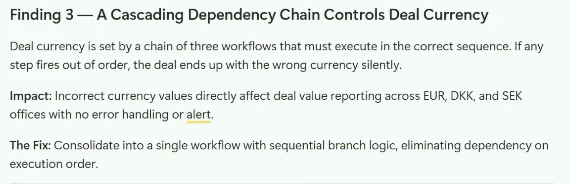
Watch the map review: 100 seconds condensed into 12.5 seconds at 8× speed. Silent, with fine text blurred throughout.
The lesson: use a controlled sequence where actions depend on one another. Separate modules still make sense for independent jobs. This illustrates the design rationale; it does not quantify a post-fix performance gain.
See the workflow governance planShow detailsHide details
Explore: key takeaways from the projectShow detailsHide details
- Fix the foundation before adding features. ADC did not need another layer of automation; it needed trustworthy data, clear ownership and agreed governance.
- Map dependencies before deleting legacy assets. The workflow and property review reduced the risk of breaking live processes while cleaning the portal.
- Design around the real sales process. Lifecycle stages, lead views and routing were based on ADC’s operating reality rather than generic CRM conventions.
- Training is part of the implementation. Documentation, Loom walkthroughs and a live handover made adoption a deliverable, not an afterthought.
- Measure the next chapter honestly. The engagement established the operating and attribution foundation. Revenue uplift has not yet been formally quantified, so this case study focuses on verified process, system and adoption outcomes.